Sweet Potato & Lontong
Sweet Potato

200g of sweet potato has 41.4g of carbohydrates, 0.4g of fat, 4g of protein.
ENZYMES
Sweet potato contains mainly of β-amylase *inserts picture of enzyme activity*

CARBOHYDRATES
Since sweet potatoes contain about 14.1 g of starch per serving, it is heavily composed of alpha-glucose molecules. Starch consists of two components, amylose and amylopectin, both of which are made up of alpha-glucose molecules.
Amylose

- unbranched polymer of many alpha-glucose units linked by a(1,4) glycosidic bonds
- coils helically into more compact shape
- helix is held together by hydrogen bonds
Amylopectin


- branched polymer (2x more glucose units than amylose)
- Main chain linked by a(1,4) glycosidic bonds while side chains are attached to main chain by a(1,4) glycosidic bonds.
Alpha-glucose
- -OH group on Carbon atom 1 projects below the plane of ring
FATS
Sweet potatoes contain a small amount of omega-3 and omega-6 fatty acids.
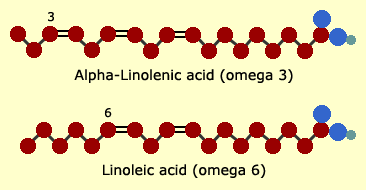
Omega-3 fatty acids
- polyunsaturated, with a carbon-carbon double bond at the third carbon atom from the end of the carbon chain
PROTEIN
- Primary Structure: made up of 129 amino acids of 20 different types joined together by peptide bonds
- Secondary Structure: local spatial conformation of a polypeptide's backbone, excluding its amino acid side chains. most common elements of secondary structure are the α-helix and β pleated sheets both of which are stabilised by hydrogen bonds.
- Tertiary Structure: overall 3-D structure of a polypeptide chain due to the extensive bending and folding of the polypeptide chain that result in a precise, compact globular shape. There are four bonds that maintain the tertiary structure, namely hydrogen bonds, ionic bonds, disulphide bonds and hydrophobic interaction.
- Quaternary Structure: Proteins that consist of two or more polypeptide chains can display an addditional level of structure, the quaternary structure, which involves inter-chain interactions as opposed to the intra-chain interactions seen in tertiary structure. Each polypeptide chain in such proteins is called a subunit. The subunits are held together by hydrogen bonds, ionic bonds and hydrophobic interactions to form a multimeric protein.
Lontong

1 serving of lontong has 36g of carbohydrates, 21g of fat, 13.3g of protein.
ENZYMES
The cabbage found in lontong contains the myrosinase enzymes, which are needed to help convert the cabbage's glucosinolates into cancer-preventive compounds.

CARBOHYDRATES
Sucrose is the main sugar found in the ketupat rice in lontong.

Sucrose
- made of two monosaccharides - glucose and fructose
- highly soluble and chemically unreactive
FATS
Lontong is high in saturated fats that consist of C-C single bonds.
Cholesterol (type of sterol)
- carbon skeleton consisting of 4 interconnected rings

Therefore, to meet the RDI (recommended daily intake), 3 servings of lontong and 5 servings of sweet potatoes have to be consumed.
|
Food/Component per serving (g)
|
Sweet Potato
|
Lontong
|
Projected RDI
|
RDI
|
|
Carbohydrates
|
41.4 x 5 = 207
|
36 x 3 = 108
|
207 + 108 = 315
|
300
|
|
Protein
|
4 x 5 = 20
|
13.3 x 3 = 39.3
|
20 + 39.3 = 59.3
|
50
|
|
Fats
|
0.4 x 5 = 2
|
21 x 3 = 63
|
63 + 2 = 65
|
65
|
The RDI for fat has been met exactly, while there is a slight excess of both carbohydrate and protein.
posted by Jamie @ 4:00 AM
0 Comments


0 Comments:
Post a Comment
Subscribe to Post Comments [Atom]
<< Home